
The Expected Value
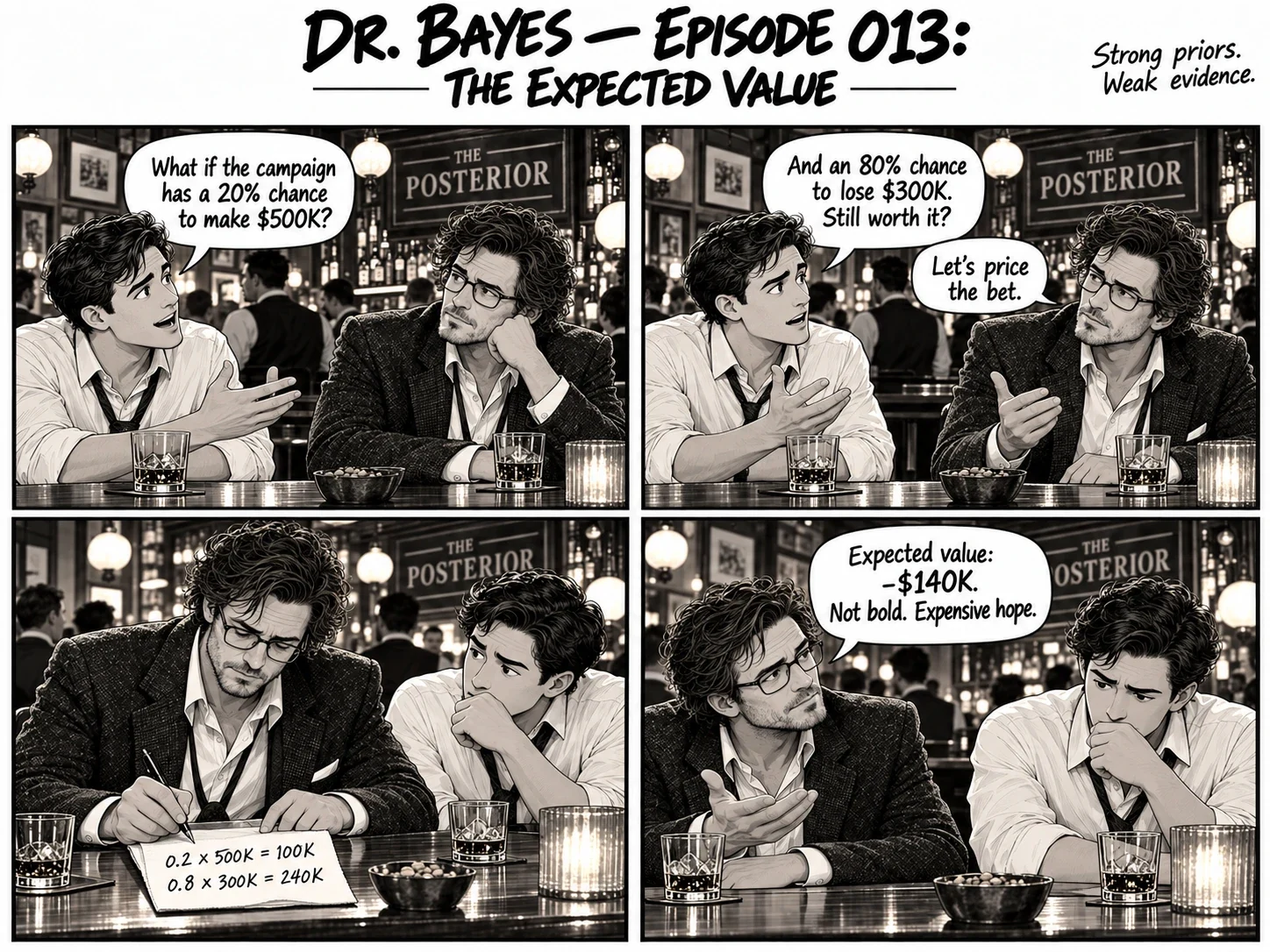
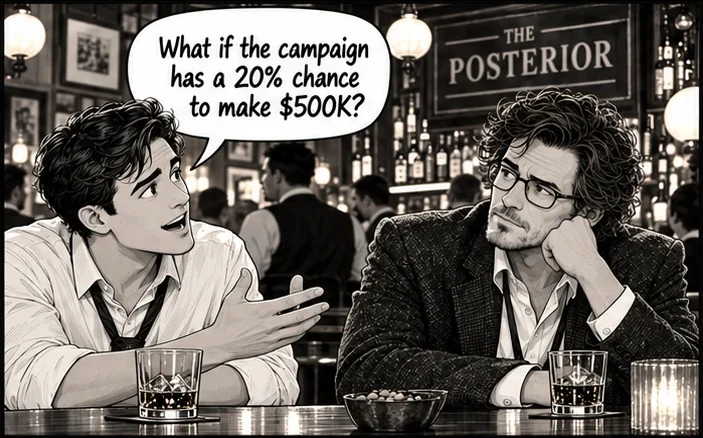
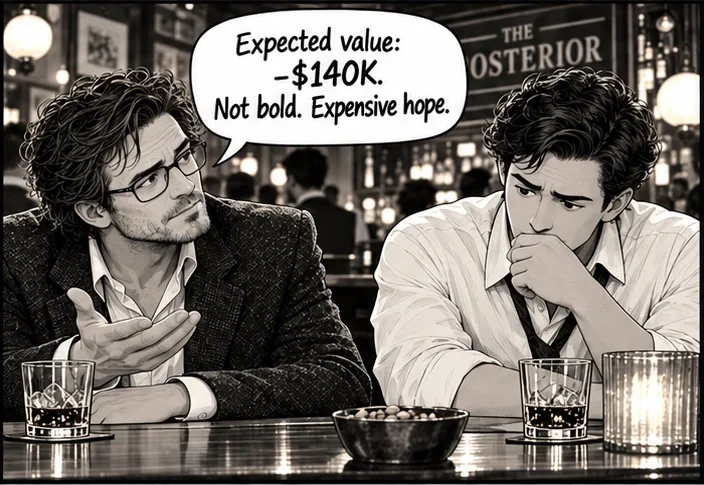
The arithmetic of a long shot. At The Posterior, Dr. Bayes prices a proposed campaign: a 20% chance of making $500,000 against an 80% chance of losing $300,000.
Behind the joke.
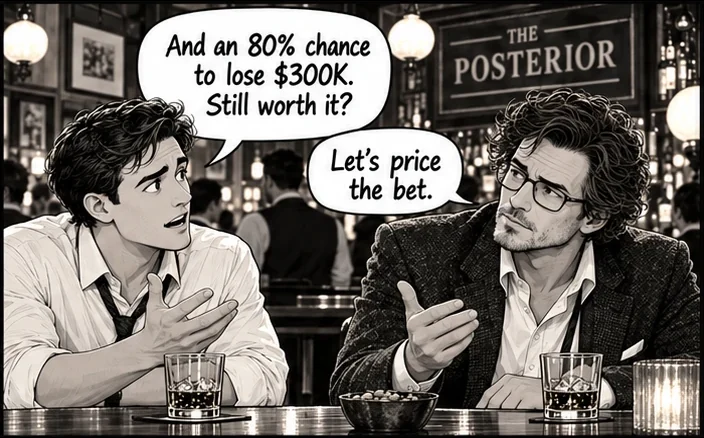
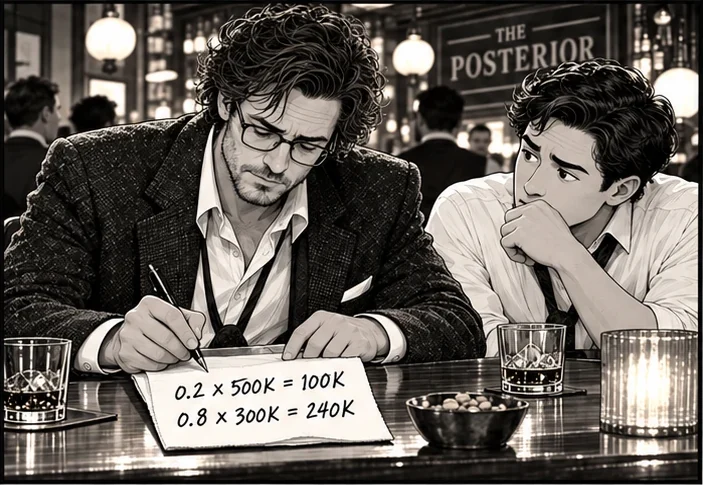
Expected value weighs each outcome by its probability: 0.2 × $500,000 is $100,000 of expected gain, against 0.8 × $300,000, or $240,000, of expected loss. The net is −$140,000. A long shot can feel bold, but a campaign like this, repeated many times, loses money on average. There may still be reasons to take the risk; the point is to know the price of the hope before paying it.
The transcript.
For readers who prefer dialogue without zooming in.
Read the dialogue ↘
Young Executive: What if the campaign has a 20% chance to make $500K?
Young Executive: And an 80% chance to lose $300K. Still worth it?
Dr. Bayes: Let's price the bet.
Dr. Bayes (on his napkin): 0.2 × 500K = 100K. 0.8 × 300K = 240K.
Dr. Bayes: Expected value: −$140K. Not bold. Expensive hope.