
Updated Beliefs
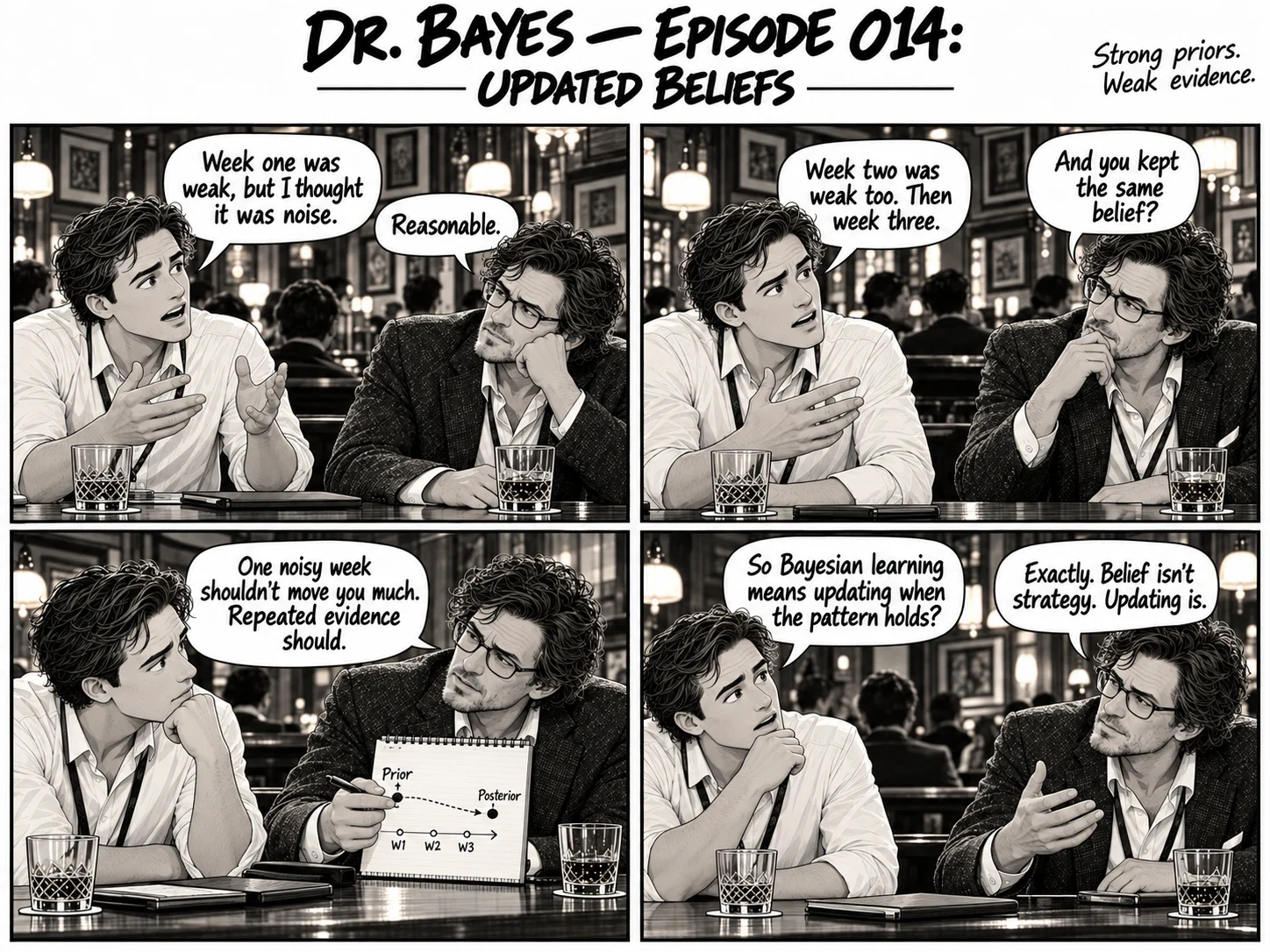
When noise starts repeating itself. Three weeks of disappointing results give the young executive a lesson in Bayesian learning: meaningful new evidence should change our beliefs.
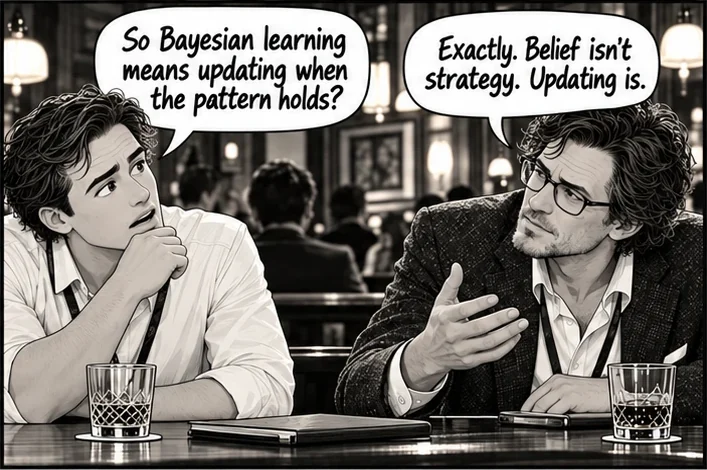
Behind the joke.
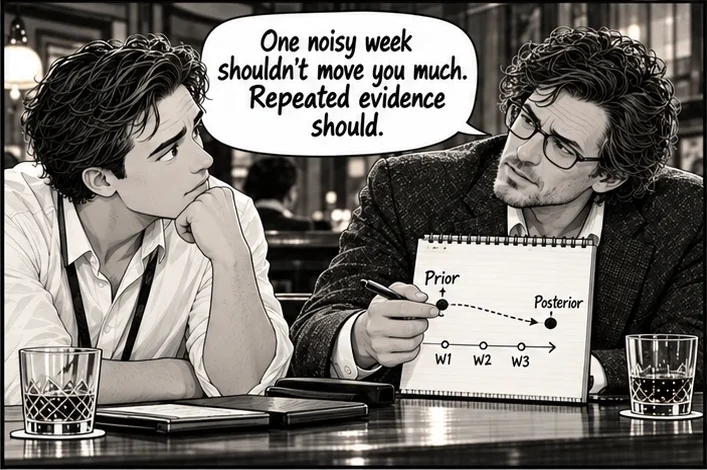
Any single week of results is noisy, so one weak week should shift a belief only a little. But evidence accumulates: three weak weeks in a row are much less likely to be bad luck, and each one moves the belief further, as Dr. Bayes's sketch from prior to posterior shows. Holding the original belief after the pattern repeats isn't conviction; it's ignoring the data.
See the numbers behind the jokeThe transcript.
For readers who prefer dialogue without zooming in.
Read the dialogue ↘
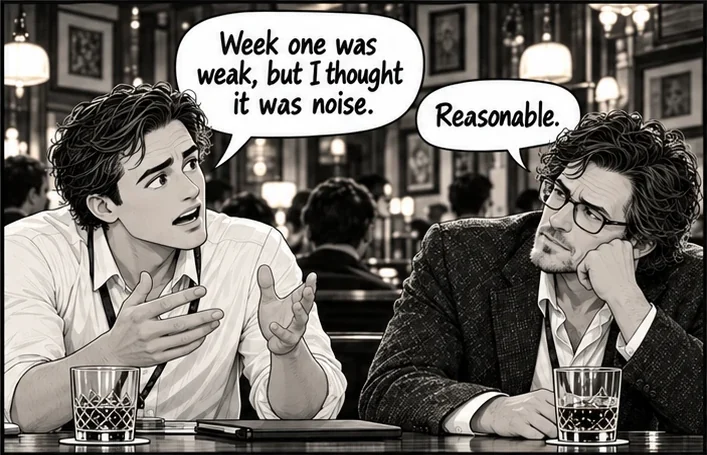
Young Executive: Week one was weak, but I thought it was noise.
Dr. Bayes: Reasonable.
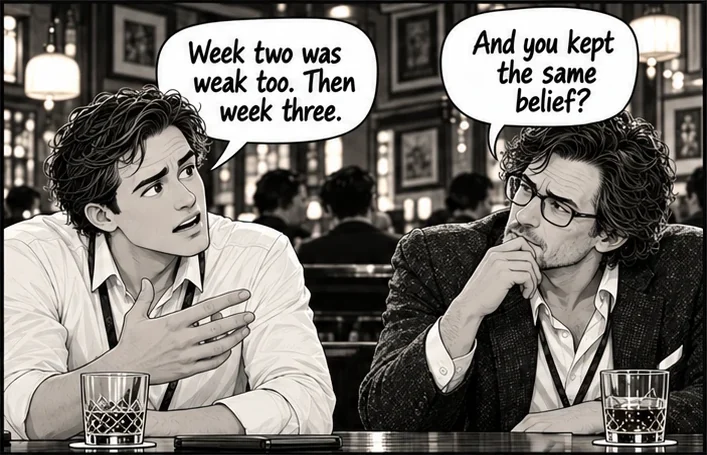
Young Executive: Week two was weak too. Then week three.
Dr. Bayes: And you kept the same belief?
Dr. Bayes: One noisy week shouldn't move you much. Repeated evidence should.
Young Executive: So Bayesian learning means updating when the pattern holds?
Dr. Bayes: Exactly. Belief isn't strategy. Updating is.