
Prior
What you believed about an unknown quantity before seeing these data. A distribution, not just a hunch or a single number.
BEHIND THE MATH · FIELD NOTE NO. 001
Two marketers claim the same return. One has weak evidence. The other has precise evidence. Dr. Bayes would like to see more than the headline.
“When two people hand me the same number, I ask how they got it.”
— DR. BAYES, MAKING FRIENDS AGAIN
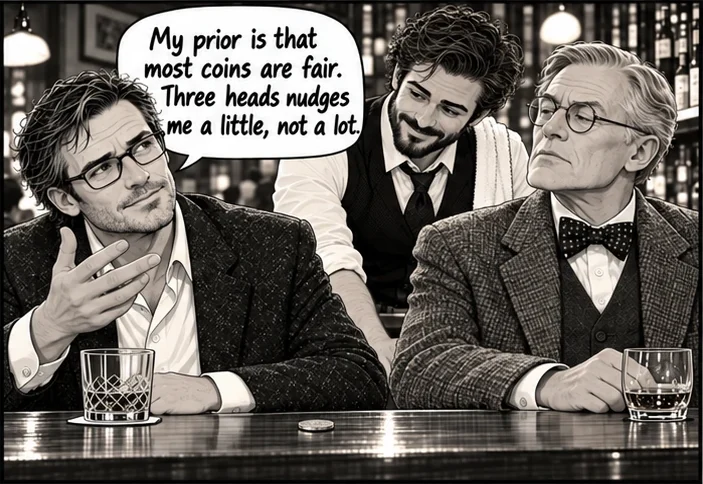 FIG. 01 · AN ACTUAL PRIOR, IN ITS NATURAL HABITAT.
FIRST, THREE WORDS
What you believed about an unknown quantity before seeing these data. A distribution, not just a hunch or a single number.
What the observed data say about different possible values of that quantity. More precise data produce a narrower likelihood.
Your updated distribution after combining the prior and the likelihood. It describes both your new estimate and your remaining uncertainty.
The prior and evidence are the inputs. The posterior is the result.
THE THOUGHT EXPERIMENT
Imagine two separate campaigns that both produce a data-only estimate of 3× return on investment (ROI). We have much less precise evidence for one campaign than for the other. To isolate that difference, give both exactly the same prior.
ROI is positive in this simplified example. We work in log(ROI), where the prior, likelihood and posterior can all be represented as normal distributions.
Prior median ROI: 1.22×. Here, 0.2 is the center on the log scale and 0.9 is its standard deviation.
The prior mean on the ROI scale is 1.83×, not 1.22×. The distribution has a long right tail.
Both hypothetical data estimates center on log(3) = 1.099. Only their assumed uncertainty differs.
Hypothetical evidence uncertainty
Log-scale SD = 1.20
Hypothetical evidence uncertainty
Log-scale SD = 0.20
SHOW ME THE NUMBERS
In this normal-distribution teaching calculation, precision equals the inverse of variance. Less uncertainty means more precision, so that source gets more influence.
Prior: 1 / 0.9² = 1.235
A's evidence: 1 / 1.2² = 0.694
B's evidence: 1 / 0.2² = 25
| MEASURE | CAMPAIGN A | CAMPAIGN B |
|---|---|---|
| Data-only ROI | 3.00× | 3.00× |
| Evidence SD (log scale) | 1.20 | 0.20 |
| Weight on prior | 64.0% | 4.7% |
| Weight on evidence | 36.0% | 95.3% |
| Posterior median ROI | 1.69× | 2.88× |
| 90% credible interval | 0.52–5.52× | 2.09–3.96× |
Posterior log-ROI ≈ (64.0% × 0.200) + (36.0% × 1.099) = 0.524.
Exponentiating gives a posterior median of 1.69×.
Posterior log-ROI ≈ (4.7% × 0.200) + (95.3% × 1.099) = 1.056.
Exponentiating gives a posterior median of 2.88×.
The posterior's spread also follows from the combined precision. Campaign A still has a wide credible interval including ROI below 1. Campaign B's is much narrower. The same headline supports very different degrees of confidence.
THE EVIDENCE LAB
Keep the data-only ROI at 3×. Change how certain the evidence is, or change the belief you started with.
Both campaigns report 3× ROI. How precise is the evidence behind that claim?
Smaller uncertainty gives the observed data more influence. This is a hypothetical estimate, not a measured campaign result.
Before observing the results, what ROI seemed typical? Keep the prior uncertainty fixed at 0.90 on the log scale.
Moving your starting belief changes the posterior. Changing its precision would change the weights as well.
Every control illustrates a simplified, one-parameter calculation. No real campaign data is used.
The vertical scale stays fixed. Changing evidence uncertainty alters the evidence and posterior, not your prior. The prior moves only if you adjust its own control.
That's quite a claim. Unfortunately, the evidence seems less certain.
THE FINE PRINT DR. BAYES WOULD INSIST ON
These numbers are illustrative. We chose the evidence uncertainties of 1.2 and 0.2 to show the principle—not because we measured them in real campaigns. The precision-weighted calculation applies to this one-parameter normal model on the log scale; it is not a universal shortcut for every Bayesian analysis.
A highly precise but biased measurement can still be confidently wrong. More observations help only when they provide genuinely informative evidence. And when results depend strongly on your choice of prior, you should examine that sensitivity before making a decision.
“I reserve the right to be less wrong tomorrow.”— DR. BAYES
READ THE COMICS